Farm Photos

Sunday, January 8, 2017

5 Unknown Reasons Why a Simple Life is a Happy Life

I wonder what my parents were thinking the day I came home from college and said, “I want to put my education to work. I want to homestead!” There may have been a long pause, I can’t remember now, followed by some expertly crafted support rhetoric. I do remember, though, how that passion was sparked in what seemed like an instant. It was as if there was an unfinished puzzle sitting in front of me, and I had finally put enough of the pieces in to figure out what the picture was. I was entranced by the idea that I could work, live without clutter and noise, eat well, be sustainable, and stay healthy, all without driving anywhere. I knew it was for me, but not everyone who finds happiness in simplicity does in overnight, and happiness isn’t a permanent state. Exploring what happiness and simplicity really are helps to appreciate how a simple life, while maybe less convenient, can be a happy life.

1. Hard Work is Rewarding


It’s what your grand-pappy used to say right? What doesn’t kill you makes you stronger. I’m not going to pretend that fixing broken fences in the snow and rain is hella fun! It is not. Knowing yourself, though, is an unparalleled reward and there isn’t a better time to get to know yourself than when you are giving something your all. Real satisfaction is achieved in creating something with blood, sweat, and tears and there’s a lot to be learned from failure, like perseverance.  An integrated, agrarian life combines problem-solving with physical ability, research with experimentation. It occupies both your head space and your body. That is what I call a complete workout.

“I'm a greater believer in luck, and I find the harder I work the more I have of it” 
 
Thomas Jefferson

2. Creativity Abounds

I often speak with creative professionals who express concern that living simply is a boring, day-to-day exercise in the mundane; a cyclical ceremony honoring obsolete traditions. This is why my husband and I strive to make every act on the homestead an act of art. We don’t have to go out of our way either. When I design the year’s garden and then watch my beans, squash, and corn all grow into an expression of my intention; that is creativity. Crafting a new design for a gate, fence, or feeder fills the creative cup. Living simply buys you back time that would otherwise be spent in the car, at the office, restaurant, shop, club or movie. So, I have time to take photos, stretch canvas and actually paint. Not to mention the inspiration that bubbles over when surrounded by happy animals and rich gardens.

“My wish simply is to live my life as fully as I can. In both our work and our leisure, I think, we should be so employed. And in our time this means that we must save ourselves from the products that we are asked to buy in order, ultimately, to replace ourselves.” 
 
Wendell Berry, The Art of the Commonplace: The Agrarian Essays

3. Practicing Goodness

A very happy time in my life was when I lived in a small apartment the city and literally walked 15-20 blocks to work every day. Every morning, the city came alive. Each day felt like I was a part of this organism. I was a cog in this machine that was propelling humanity toward future grandeur, and being a part of that something-bigger felt amazing. It feels great until you are faced with the fragility of it all, the wastefulness, and the reality that unless something changes it will all collapse. The ultimate organism that we are all a part of is Earth, not city. Knowing what is good for us takes reflection, and a life of simplicity allows for that. Watching nature come alive each morning is a sense of awe beyond any, and you don’t have to live in the country. An urban homestead still awakens to the sounds of its birds and gardens, and to the smell of home cooked meals.

“We have lived by the assumption that what was good for us would be good for the world. And this has been based on the even flimsier assumption that we could know with any certainty what was good even for us. We have fulfilled the danger of this by making our personal pride and greed the standard of our behavior toward the world - to the incalculable disadvantage of the world and every living thing in it. And now, perhaps very close to too late, our great error has become clear. It is not only our own creativity - our own capacity for life - that is stifled by our arrogant assumption; the creation itself is stifled.”
  
Wendell Berry, The Art of the Commonplace: The Agrarian Essays


4. An Integrated Life

My childhood in the 80’s and 90’s was a series of rides to scheduled blocks of time. Ride the bus to school, ride the van to volleyball practice, ride in the car to piano lesson, ride with mom to do errands, ride to doctors office, ride to assisted living facility to visit grandma, it just seemed very compartmentalized, like those professional organizers who want you to have a plastic bin for every item you own. A simple life is an integrated life which means that the homestead is the school, and the grocery store, and the workplace, and the doctor’s office (within reason). Each act of living becomes an act of teaching, working, and learning. There is intention and information in something as simple as taking a shower when you’ve plumbed your grey-water through a greenhouse where it waters year-round salad greens.

“Though the problems of the world are increasingly complex,
the solutions remain embarrassingly simple.” 
 
Bill Mollison

5. Security in Sustainability


We’re used to depending upon utilities and retail stores so much, we place our sense of security in them. Pulling in a year’s worth of garlic, onions, and potatoes always provides me with the deepest sense of stability, a ‘we’re going to be alright’ feeling. Imagine never paying a utility company again. As long as the sun is shining or the wind is blowing you will have lights, hot water, and telephone. Even if your homestead isn’t totally off-grid, with each step toward sustainability you gain security. In the gales of a winter storm, knowing that your Rocket-Mass-Heater keeps you toasty warm with the slightest amount of wood is enough to have you singing “let it snow.” Our current system of production, distribution and consumption is not sustainable. It is totally dependent upon fossil fuels, the exploitation of animals, and dwindling free resources from the Earth. It will fail, and withdrawing our investments in it now not only protects us, but it encourages the larger system to change for the better.

“A sacred way of life connects us to the people and places around us. That means that a sacred economy must be in large part a local economy, in which we have multidimensional, personal relationships with the land and people who meet our needs, and whose needs are met in turn.” 
 
Juliana Birnbaum Fox, Sustainable Revolution: Permaculture in Ecovillages, Urban Farms, and Communities Worldwide

Friday, December 30, 2016

The Vegetarian Agrarian

Whew, it's been a while. I've decided to dust off this old farm blog and breathe new lift into it (so easy midwinter to say that)! I will attempt to post at least a few times a month so subscribe!! Of course, follow us on Facebook and Instagram for frequent farm updates, photos, and musings from this crazy farm lady. 


I know that I tend to be pretty radical in my convictions. All in the name of a better world, I say. Surprisingly, the one that affects me the most day to day is a philosophy that I hold really near and dear to my own heart. In fact, you might say that I think my heart is open because of this practice. That’s the practice of vegetarianism, abstaining from animal consumption. I find myself talking about this one thing more than most other things including gardens, farming, or Permaculture. There is one particular aspect that I want to specifically give some thought to, and I awoke from a dream this morning with this on my mind.


Animal farming. If you’re a dedicated Permaculture or organic farming enthusiast, chances are you’ve seen Joel Salatin and his amazing Polyface Farm in Virginia. YouTube is chalked full of videos of his farm, tours, chicken processing, TED talks, and presentations that Joel has given. He’s an intellectual, and a spiritual guy. I see the light inside of him when he talks about his farming methods. While, like so many other farms, they include the breeding and slaughter of animals, his approach doesn’t revolve around that, but rather the ideal health and happiness of his animals.


Photo Credit: CrozetGazette
The vision: green pastures with our own animals for meat, and some profits too. I know that vision. Creating it, in reality, is such a different story. More often than not an animal breeding venture ends in a battle of enslavement. The farmer enslaved by his responsibility to the animals which he or she created by enslaving the animals.


Salatin preaches about low infrastructureand, therefore, low startup cost. However, there’s another cost that so often seems overlooked in the initial start-up process of animal farms. It’s labor. I think everyone underestimates how much physical labor it takes to care for even a relatively small number of animals. For example, I spent two years working for a certain type of artisanal farm. It started out with 150 animals. To care for these animals they had one part-time employee plus the owner who was expected to split their time between running the business and caring for the animals. Needless to say, this turned into what I call a ‘mutual enslavement’ situation. Now you’re stuck.


This isn’t like getting into a garden where if you get really fed up you can walk away. You can’t walk away from hungry mouths to feed and yet people seem to do just that. They disconnect, they check out mentally on the situation and relinquish their responsibility because they’re tired. They start only going out to the animals when there is a dire need to do so, attempting to put them out of sight and therefore out of mind. Well, this leads to animal neglect and then animals get sick and die. Don’t underestimate how much this happens. The line between busy and neglectful is the same line. I’ve watched this time and again from people who are really passionate about what they want to do and people who actually care about the animals. They just get caught in mutual enslavement.

Photo: Flickr
The animals at this farm all got worms and hoof rot within the first year that I was there. Some of them died, some suffered, and eventually all of them had to be moved off-farm. Falling into the trap of making different sized compartments in our hearts for farm animals vs. pet animals is dangerous. The good shepherd should know all of his sheep by name, that’s from the Bible, and Wendell Berry’s “On Food and Farming.” If something is found in those two equally impressive texts, it must be important.

Problems of the heart


The most heartbreaking thing about the above situation and similar entrapments is that the farmer, a lover of the natural world, is forced to harden his or her heart toward their own animals. I have relationships with my animals and conversations; they know when I’m in a good mood or a bad one. They know the difference in the tone of my voice when I’m saying “Hi, I’m passing by” vs. “Hey, come over here.” I can tell them apart by their brays.  I know that Mattie has trouble with his hoof glands sometimes, and Lamby will not always follow the group and needs a bit of a keener eye on him. Other farmers who I’ve spoken with think that is ridiculous, they chuckle a little bit and dismiss me as a crazy woman who has too much love for her animals. I respond with, it’s not a problem of too much love which is never a problem. The problems I can see lie in the fact that you don’t think you have room in your heart, or your life, for that kind of love. That is what Buddha would call a hardened heart.

If you got into farming or homesteading to make money, you should get out of it and go into banking. If you got into farming so you can enjoy the pastoral scenery from the comfort of your living room window, you should get out of it and buy property next to a farm. The only reason anyone should ever have animals on their farm is because they LOVE them. Truly love them. It’s not a good enough reason to have grass that needs eating or a barn that needs filling. It's not even good enough to get animals just to feed your family. Making money is certainly not a good enough reason to raise animals...because you won't make money.

I know that Joel talks a good game and really makes raising meat animal's look easy. So many people think they are going to hatch a batch of chicks or kid their goats and sell the animals to make some cash. Isn’t that what a successful farming model looks like? This is what I call ‘the drug dealing of Permaculture.’ Here is why.

I have to pause here and say, there are many homesteaders who raise their own animals for their own meat, they do it well and the animals are well cared for. While I personally would still think that hardens the heart; it's really up to each person. I am specifically talking about people who choose to raise animals as a source of income for instance, meat animals or really any breeding-based business model. 

Remember when you were a teenager and just found pot? You were like OMG, all I have to do is grow some pot. Then I get to smoke it for free and make money off of all the suckers who buy my pot! It’s a brilliant business model with no flaws sure to take me straight to the moon. How often did that work out for them? I’ll tell you...never. This is because growers invest a lot of time and resources into producing a quality product. It takes some skill and experience just as it takes some skill and experience to get a successful farm model down. It also takes resources, both foreseen and unforeseen, like your time. The people who made a success out of pot growing didn’t do it overnight, they worked at it like everyone else works at what they do.

Sheep rescued from backyard butcher situation.
Not only do homesteaders and farmers underestimate what it will take, they also tend to overestimate the market for their meat product. Polyface farm waits for a large enough order and then drives to urban areas where distribution happens all at once. He also has an inspected slaughter facility at his farm so processing is all done in-house.

Often homesteaders are in rural areas where the demand for home-raised meat is considerably lower. This narrows their market and brings the price of their product down even if it’s better quality. Driving it into the city is only an option for farmers who paid to have their animals slaughtered in an inspected facility, and even then the meat is considered ‘custom’ and must be stamped with “not for sale.” Try convincing urban foodies to buy that! The point is if you are dedicated to producing meat, it’s still going to take some time to develop a market.


Grassy Knoll or Muddy Hole


No, it’s not a Kate McKinnon sketch from SNL however dangerously close. This is your pastoral green farm wrecked. I count myself among the many homesteaders and farmers out there who totally underestimated the amount of vegetation my critters would eat. I went from bragging about never having to pull out my lawn mower to wading through ankle deep trenches of mud in one year. We should all remind ourselves that overgrazing is largely how we ruined the planet in the first place so it’s time we learn the lesson of scale.

Again, I will compare with Salatin whose farm, mind you, is smack dab in the middle of what used to be rich natural grasslands. While his system of daily rotation surely works if followed diligently, keep in mind that Polyface land is predisposed to grow grass. Obviously, his business model was designed around that as yours should be designed around your specific geographical advantages.

I get mocked for having three wethered sheep. People are always saying, “But don’t you want the lambs each year they are so cute?!” Yes, they’re cuteuntil I have to feed or sell them.  This way, I get to enjoy my animals, avoid the heartbreak of separating them, and provide them with the care they need. My farm benefits from their controlled grazing and fertility, I get a wool yield each year from them and the whole thing is sustainable in that way, with very little inputs and no outputs. Would you consider them pets, or farm animals? I don’t think there should be much of a difference.

Photo: Pawel Kuczynski
I think one thing that pushes people into obtaining a bunch of meat animals is panic. They get out on the land and start to feel scarcity and wonder what they will eat out there. Growing fruit trees or having a vegetable garden seems daunting and the time gap between now and when you would have food seems enormous. Maybe you don’t have much of a green thumb yet and your garden didn’t do so well the last year. So, people panic and adopt 50 pigs, because they think that’s equity in food. What is really happening is you just traded the equity of your time and landscape for whatever food the pigs bring in after all the inputs you’ll have to buy for them. So, instead of honing your skills and prepping land for fruit trees, you’re going to be spending time moving, feeding, watering, slaughtering, and trying to sell these pigs.

My advice, whether anyone wants to take it or not, would be to calm down. You don’t have to provide yourself with all your own food right away; you can take a few years to establish a system. In fact, Permaculture dictates that everyone take at least one year to just observe the land. Do this, and don’t feel guilty about grocery shopping for a while. Use that time to really think about your vision, really think about the diversity of foods that you could produce, really think about what your landscape wants to be, and then design a system around that. The long term benefits will pay off.

The Vegetarian Agrarian


Having a farm as a vegetarian is, in my book, the best of all possibilities. I have relationships with my animals that will never end in betrayal or death. Children who come to our farm can fall in love with all the personalities here and never have to worry that one day they may come back to their friends on a plate. I don’t have to harden my heart to that supposed ‘reality.’ The time that I put into my farm is spent doing things that I love and that improve the land like planting food forests, vegetables, and herbs or soil regeneration, habitat restoration, and fungi propagation. My diet is bursting with rich flavors and homegrown goodness. I don’t feel that we’re lacking in anything. We have to purchase grains but we’d have to do that anyway on five acres. The fruit trees will soon produce enough for us but for now we buy some fruit too. Nothing is wrong with being part of an economy in that way. This is knowing the scope of your scale and staying within it.


One of our wethers, Mattie, scratching on the truck.


I don’t feel competitive with the natural world or like I am trying to catch up with her clever tricks the way I imagine the artisanal farm owners did when they were trying to treat that many animals for a disease that lives in the soil. Above all those other things (part of me wants to delete everything I’ve said and just say this), I can’t emphasize how amazing it feels not to be a part of the slaughter.  To let my heart swing wide open and welcome everything inside, it feels like Truth. The way in which we treat other living beings in this world is wrong and too often overlooked. I would like to re-define our relationship with animals. It would re-define our relationship with ourselves.
A painting in one of my favorite artist's series from Pawel Kuczynski

Wednesday, December 28, 2016

Carnivorous Appeals to Antiquity

We here at Soulstice Gardens have been experiencing a lot of mixed feedback regarding our choice to abstain from eating animal flesh. It has all got me to thinking about meat in our culture, the new carnivorous fad diets that make meat-eating seem like the healthiest thing possible, and people's tendency to defend meat consumption till their blue in the face. Even I have gone back and forth on this issue. Some of the research regarding the nutritional benefits of meat products like bone broth illustrate the benefits of eating nutrient-dense foods. Others point to the rise in heart disease from eating such high-calorie meals. If health is your concern, there are vast numbers of diets that are healthy. We evolved on this earth as omnivores, and thank goodness for it because without the ability to eat meat we would never have made it this far. Is it time for us to evolve beyond carnivorism?

So, I am investigating this question: Nutritional or not, is eating meat the 'right' thing to do today? Is there an argument either way? 

The Environmental Side
I would argue that abstaining from meat consumption in today's world is possibly among the most positive things anyone can do for the environment. Every year globally, 56 billion animals are killed in an effort to feed humans meat. Let's pause for a second and think about the enormity of that number, that's 3000 lives per second. Here is a USDA count from 2008 for only U.S. consumption:

USDA slaughter stats 2008
Cattle: 35,507,500
Pigs: 116,558,900
Chickens: 9,075,261,000
Layer hens: 69,683,000
Broiler chickens: 9,005,578,000
Turkeys: 271,245,000

That was six years ago, and experts today suggest that our current numbers are expected to double by 2020. According to Cassandra Woods from Stanford Woods Institute for the Environment:
"The meat industry also has a significant impact on global warming. Livestock production accounts for 18 percent of global greenhouse gas emissions, including 9 percent of carbon dioxide and 37 percent of methane gas emissions worldwide, according to the Livestock, Environment and Development (LEAD) Initiative, an international consortium of government and private agencies based at FAO headquarters in Rome. 
More than two-thirds of all agricultural land is devoted to growing feed for livestock, while only 8 percent is used to grow food for direct human consumption, LEAD reported. If the entire world population were to consume as much meat as the Western world does-176 pounds of meat per capita per year- the global land required would be two-thirds more than what is presently used, according to Vaclav Smil, professor of environment and geography at the University of Manitoba and participant in the EVP study."

It is the rise of industrial meat that has brought down small family ranches and destroyed the pastoral scene of a green field spotted with contented cows.

Sunday, September 28, 2014

Why You should Eat Organic Twinkies


The other day there was a Facebook post floating around, it had three skeletons in coffins and each skeleton was reflecting upon his life with a funny/ironic sentiment. One of them was “I’m glad I ate Organic!”

Is eating organic simply a healthy choice? No. Is it about just keeping yourself thinner or prettier or healthier? Not by a long shot. That is one way of looking at why a person would choose to eat organic, however the other reasons are often more important…particularly now at this time of climate crisis. Organic agriculture is not just a trend, it’s not just a fad, it’s not a health kick, it is and will be the only future of food that we have; and the fact that it’s healthier and tastes better is just a bonus.
Every person should know that 40%, yes 40%, of global carbon emissions come from industrial agriculture (see Vandana Shiva, Soil not Oil). This is a gigantic contributor to global warming. Not only does industrial agriculture contribute heavily to carbon emission, but it actually produces less in calories than organic agriculture. For all the industrial Ag. Companies talk about efficiency, growing many acres of one crop is not only destructive and extremely risky, but you’re only producing one nutrient deficient product. This type of highly mechanized agriculture is entirely dependent upon fossil fuel; from the tilling of the soil, addition of fertilizer, to the planting of seed, to the harvest, to processing and distribution every step along the way requires heavy inputs of oil. Without oil, this type of agriculture would be impossible to maintain, so it’s a highly dependent system.

https://www.youtube.com/watch?v=ojrub4-ibDM  - Democracy Now with Vandana Shiva

“In the world's temperate climates human agriculture has supplanted 70 percent of grasslands, 50 percent of savannas and 45 percent of temperate forests. Farming is also the leading cause of deforestation in the tropics and one of the largest sources of greenhouse gas emissions, a major contributor to the ongoing maul of species known as the "sixth extinction," and a perennial source of nonrenewable groundwater mining and water pollution.”


“On the other hand, an organic farmer "needs to create a fertile soil that provides sufficient nutrients at the right time when the crops need them. The same is true for pest management." But the end result is a healthier soil, which may prove vital in efforts to make it more resilient in the face of climate change as well as conserve it. Organic soils, for example, retain water better than those farms that employ conventional methods. "You use a lot more water [in irrigation] because the soil doesn't have the capacity to retain the water you use,"” – Scientific American; will organic food fail to feed the world.
Industrial agriculture displaces real farmers. As corporate driven agriculture seeks out new fertile land to grow more monocrops on, it takes it from localized, small farmers who would put that land to better use. These companies go into developing nations, where a localized food system is critical to survival, and buy up all the fertile land and water for production. They claim that by doing this they provide jobs and ‘education’ for the local communities but what they’ve really done is undermined a local food system that has worked for thousands of years. They monocrop, which means less diversity of food is produced and the people of that region start to suffer from nutrient deficiencies. And, they push out the last of the real farmers by undercutting their prices at local markets. This alone is a reason to choose organic, as industrial agriculture cannot work in an organic model so when you choose to buy an organic product…you are choosing to let these farmers continue to produce a variety of healthy foods for their own people. You are alleviating world hunger.
Unprocessed, local agriculture produces more food. “If you are eating lettuce in NYC grown in California, it has taken 56 calories of fossil fuel energy to deliver you 1 calorie of food” – Michael Pollan, Organic Lunch or Toxin Brunch.  Eating organic says “I will not participate in this ridiculous destructive system.” According to John Reganold of Washington State University where one of the largest organic vs. conventional experiments was recently undertaken and continues "Our findings have global implications and advance what we know about the sustainability benefits of organic farming systems," and  "We also show you can have high quality, healthy produce without resorting to an arsenal of pesticides."

Biointensive mini-farming techniques make it possible to grow food using 99 percent less energy in all forms – human and mechanical, 66 percent to 88 percent less water, and 50 percent to 100 percent less fertilizer, compared to commercial agriculture. They also produce two to six times more food and build the soil.” – The Context Institute.

So, being healthier or living longer is only a small reason why you should choose to eat organic. Really, you could eat organic twinkies; although they are highly processed…so talk to your local baker. Choosing to buy and eat organic not only stands up to corporate bullies, but it takes action against climate change, against world hunger, it supports local business, and local beauty of landscape, and it makes a strong statement that you want to contribute to the solutions.

Sunday, February 2, 2014

What is Roundup? MIT Scientist Stephanie Seneff Distills the Truth


What is Roundup?


No matter how many 'no spray zone' signs you post around your house, you cannot be free of this chemical. it literally permeates every part of our lives and is found in most human bodies on the planet today. Roundup is a commercial name for a chemical titled 'glyphosate' which was patented in 1970 by a scientist, John E. Franz, working for the Monsanto corporation. Today, this broad spectrum herbicide may be responsible for the most widespread devastation of general health that we've seen on the planet ever. Whether we're talking about the health of people, the health of animals, health of family farms, insect health, soil health, plant health ect. Roundup has been Monsanto's star product since the early 70's and they've pushed it hard, succeeding in basically adapting our entire international agricultural system to revolve around it. Like all biotech products, it was introduced to farmers and gardeners as a game changer. No hassle weed control, just spray it and watch the magic happen.

Studies out of Purdue University from Professor Don Huber have linked glyphosate to the immobilization of essential nutrients in soil, and consequently a higher rate of disease and fungi infested crops. Well, as an amateur aspiring soil scientista, I thought 'immobilization of nutrients'...of course because it's killing the beneficial fungi and bacteria which mobilize those nutrients. It sterilizes the soil and leaves you with dirt. Ironically, what would farmers do upon realizing that their crops aren't taking up nutrients? They buy fertilizer...from Monsanto. What to do about the attacking fungi? fungicide...also from Monsanto. Everything about this chain reaction ends and begins with Monsanto...and that, my friends, is just good business.


Monsanto's new Genetic Engineering campaign also revolves around their bread and butter product. The first, most marketed, and most used genetically engineered seed is Monsanto's Roundup-Ready seed. These seeds, whether they be canola, corn, wheat, soy or another staple crop, are designed so they will not die upon contact with glyphosate. Instead of being selective and only spraying the edges of the fields, farmers can now spray to their hearts content and these Roundup Ready crops will just soak it in.

From Monsanto's website: "In addition to glyphosate, the formulations typically include water and a surfectant system. The surfectant system enables the products to adhere to surface of the leaves so the active ingredient can penetrate. When the product is applied to green leaves or stems, the active ingredient moves throughout the plant so the entire plant dies." While in this context they are taking pride in their effective delivery system, they are also admitting that Roundup is designed to penetrate deeply into plants. So, most genetically engineered crops are saturated to the core with glyphosate.

There are so many people trying to stay fit and healthy; they count calories and track active miles, they choose fresh meals over processed foods, they juice and take supplements, they demonize fats and sugars and point accusing fingers at foods containing these things as if eating them could shorten their lives. But where is acknowledgement of risk factors associated with repeated exposure to glyphosate? I guarantee that this chemical has taken more lives than butter and sugar, and the interview associated with this post explains why.


The video is a conversation which took place between Dr. Joseph Mercola, a nation-wide renouned osteopathic physician, and Dr. Stephanie Seneff, senior research scientists at MIT. Seneff takes us on a step-by-step analysis of just how glyphosate interacts with certain essential amino acids in our bodies and then draws clear connections between the deficiencies of these substances and the rise of certain types of illness in society including diabetes, autism, depression, auto-immune disorders, Parkinsons, and cancer. The diseases just mentioned are among today's leading killers, the rise of which happen to coincide with the widespread acceptance of industrial agriculture and glyphosate.

How long before more physicians, scientists, professors, and researchers begin to speak out about the realities of our current agricultural system and it's affects on our health? How long before mothers, students, colleagues, and professionals start drawing parallels between the illnesses they've endured, their children and families have endured, and their exposure to agricultural chemicals? One thing I'm pretty positive about, chronic illness isn't a thing. It's a phrase that we've invented for what is really the repeated abuse of our bodies through constant environmental exposure to toxins, our ingestion of inorganic substances, and our lifestyles which leave little room for physical activity or holistic treatment. Still, 75% of our health care budget goes to treating these illnesses. Treating them, not eliminated the cause of them which would effectively cure the dis-ease.


Dr. Mercola and Dr. Seneff:


Wednesday, January 29, 2014

Soulstice Gardens Poorganics


I’ve been on many sides of the food argument, from apathetic to radical and beyond. I'll admit it, the following words have come out of my mouth: “I don’t care about organic, I’ll eat Western Family all day long!” 

Given, that was a long time ago. When I said that, I was coming from a perspective where it seemed like only fancy people bought organic stuff. I couldn’t afford it, and I’d eaten the so-called “regular” food my whole life already. Why spend more on it? I didn’t know why some people made it a big deal.


Over time I learned more about the dangers of eating pesticide and herbicide residues and the ecological consequences of continuing to farm this way, and I came into a new perspective. First of all, it wasn’t just all about me. It actually made me feel selfish not to buy organic food when I could, because who was I to deny the Earth respect? I am not the type to care more about myself than the Earth, I hug trees and s***t. I don't want animals or people suffering and I don't want to turn a blind eye to it all. This was one choice I had control over, I should make the right one.

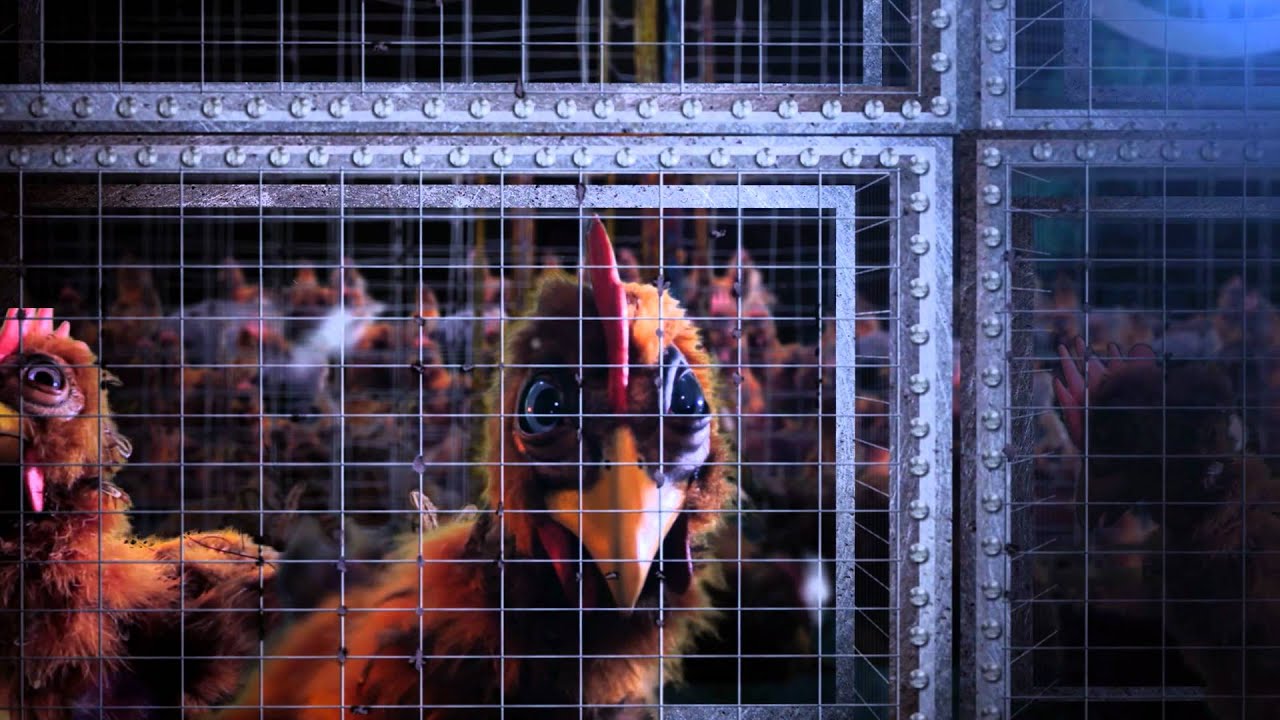
These farms are scenes from nightmares, and the folks in charge of them are cashing in on the glory of being the ‘good old American farmer’. But, they do an injustice to the homesteaders and turn of the century farmers who grew this country. The consequences of industrial agriculture have caused thousands of direct deaths, it is the world’s top industry for slave trade and labor…yes, today. The number of slaves currently stuck in the agricultural system is higher than the number of slaves on the planet at the start of the civil war. This business is the business of slavery and exploitation, it represents the worst of human character. Here we are, able to change things in a first world country, and I’ve got the nerve to say something like “I’ll eat western family all day long?” That makes me want to vomit now.


Then people started getting sick as we all grew older. Gall bladders, eye problems, allergies, cancer, and diabetes…it started becoming ever clearer that no one should be denied healthy food = medicine = health. It is a basic human right like clean water, shelter from the weather, and freedom. In a couple of years of study, I flipped my role in this producer/ consumer game.  I became the crazy hippie chick who thinks everyone is going to die unless they switch to 100% organic!
But, on that other extreme end I wasn’t getting a good response from people. I was overly passionate, came off a little crazy, and tended to scare more people than sway them. As I preached organic, I was also a poor student who already spent ½ her (very small) income and $200 worth of food stamps monthly on food…If I wanted to commit to eating all organic it meant eating nothing but rice, beans, and pickled cabbage. Not that it wasn’t healthy, but it certainly wasn’t the rainbow, flavorful, Instagram-worthy, eclectic diet that I dreamed about…and it wasn’t going to convince anyone else to eat this way.


So, how could I tell people to go organic, achieve the flavorful diet I wanted, and also sympathize with being unable to afford it? The answer was to grow it myself. I am committed to having the best of the best food at the price of my own sweat, blood, and tears and no one else’s. And, I decided that since it was going to take a lot of my time to do this, I should probably make it a job and grow enough to share with those around me. So, Soulstice Gardens is just this, a homestead style farm where I am trying to get the most flavorful and nutrient-packed diet I can from the land herein. That which we cannot produce we purchase or trade for after all, ‘self-sufficiency’ is a misleading phrase that dooms many to drudgery and self-imposed poverty. Through growing organic produce which I can sell, I will be able to purchase the additional organic products we would otherwise be unable to afford…all the while keeping on that organic train.

Looking at this from the side of producer, it’s a funny situation. Farmers, gardeners, and people who are familiar with the food system want to know exactly how all of their food is grown. Now I have conversations about whether residue from conventional produce will survive decomposition and show up in your finished compost, a much better topic than whether or not RoundUp is safe.  They want to know if we are certified, what our chickens eat, where our water comes from, what our soil tests look like, what temperature the compost heats to, how we control pests and disease, etcetera. It started to become overwhelming in the other direction; too much concern over possible contamination from “the big bad industrial world.” A better place to be than among the shelves of grocery store poison, but how to become an organic producer without having to wade through endless concerns of ‘questionable practices’, ‘knowledge battles over who knows more sustainable techniques or certifications’? I feel that I have a genuine commitment to treating the Earth, and my animals ethically. No chemical spray or fertilizer ever touches my plants or soil. Now, that being said, I feel absolutely no need to seek out inspection or certification, especially from the very institutions who have failed to protect our food system already. This is when we came up with “Poorganics” as a term for what we might describe as: organic, for the real person. I know that it's been out in the ether and there have been others' who use it with similar meaning, this is what it means to me.

Poorganics applies to both the consumer and the producer, and all types of enthusiasts of organic living. It is a philosophy that represents a dedication to knowledge, integrity, and information, while also recognizing that we live in a world where contaminates are everywhere. The best we can all do is minimize our exposure and work toward a life that is healthier. Poorganics obviously speaks to the fact that most of us don’t earn an income worthy of supporting an all organic lifestyle, but we can learn to buy organic when we can. We can learn about which products contain the highest amounts of residues and choose organic options for those things while saving money by purchasing other items conventionally. In produce, the 12 vegetables and fruits that test the highest for pesticide residue after harvest are called the ‘dirty dozen’, and it’s becoming popular now for restaurants to shop organically for the dirty dozen yet conventionally for others, such as the ‘clean fifteen’. 

As consumers, we can research the issues that affect us most: animal treatment, soil degradation, corporate greenwashing, or whatever you care about. We can choose to avoid products that directly support these practices. One of the first real commitments I made was to go organic for my dairy and eggs because I was concerned about the treatment of animals and the bioaccumulation of toxins within them. Through raising a few chickens, I am able to save money on eggs and purchase organic dairy products.

From the perspective of the producer, Poorganic is how we like to describe our produce to buyers. Certification is something for large farms, farms whose practices are industrial enough to be of concern. We grow food like the pioneers grew it because we like to eat good, fresh, unsprayed, nutritionally dense flora. Like real American farmers, we protect the land we grow it on, because it must serve us for generations to come. Poorganics, from any perspective, is about getting real. I grow tired of hearing people snuff their noses, or laugh, at the word ‘organic’ because it has become too commercialized and too stigmatized. It’s not about who has the best brand at the dinner party, it’s about realizing how industrial farming treats the ecology of our planet. It's about going inside yourself and deciding where you stand on this issue and what you want to eatNo one has to ask the waiter whether the parsley in the chutney on their fancy, wild caught salmon is organic. Or, be the guy to request the name, hometown, and date of birth of his roasted chicken. However, we should be subtly aware of what is really on our plate, what it went through to get there, and what it’s going to do upon entering our bodies.


 I don’t waste my time counting calories, and I’m not bitter enough to refuse to eat the grilled American cheese sandwich at the neighborhood picnic. I am idealistic enough to take action in my own life, to grow fresh vegetables and share them, and to offer to cook for the next picnic.